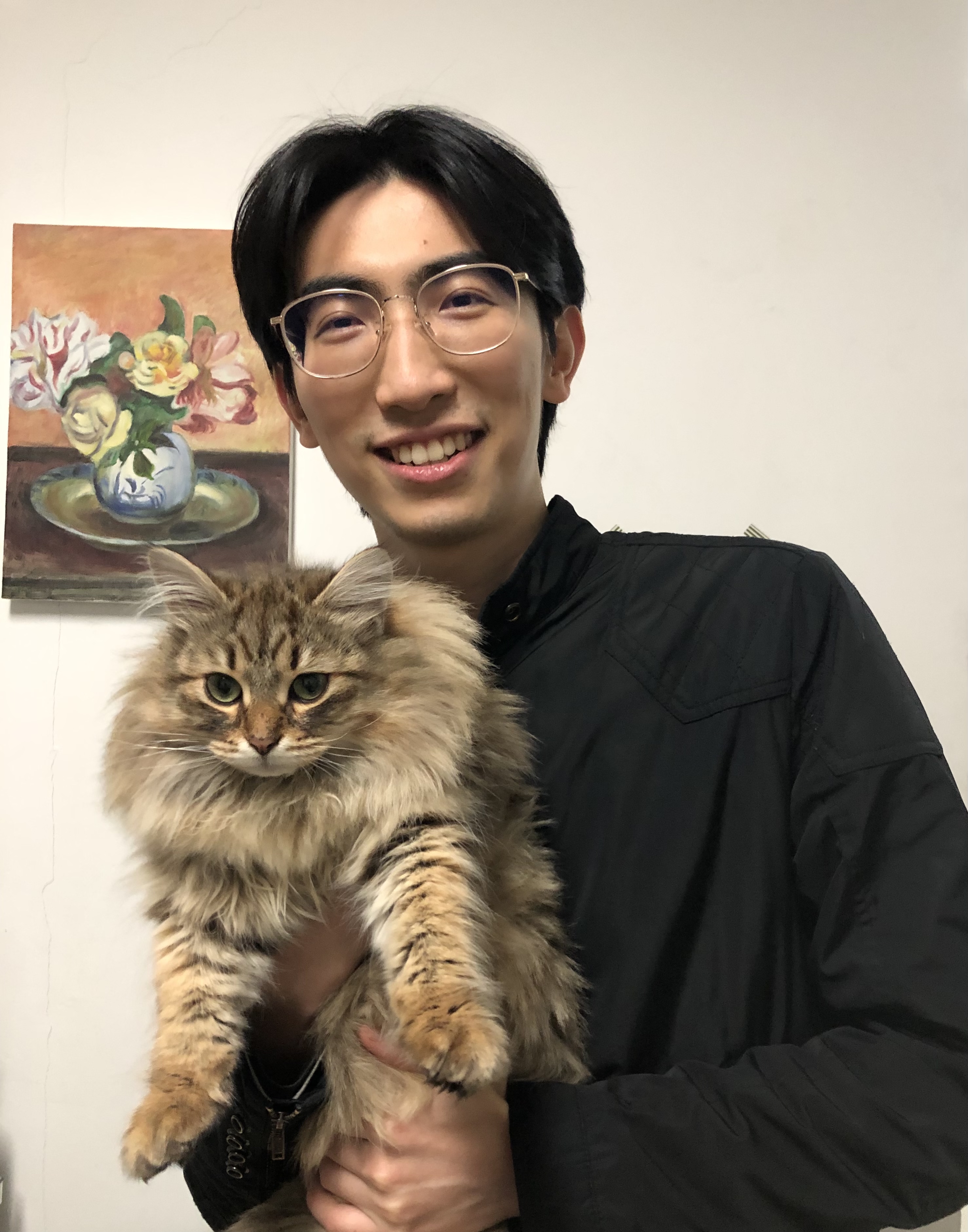
About Me
Hi! I am a cognitive scientist using interdisciplinary approaches (philosophy, experimental psychology, computational models) to study both humans (children and adults) and artificial intelligence. My research interests lie broadly in exploring the unique aspects of human cognition and intelligence, especially in comparison to current AI systems and from an evolutionary perspective. My current focus is on the social, cognitive, and computational foundations of uniquely human agentic structures and behaviors, and their significance in social coordination contexts.
I’m currently a postdoc collaborating with computational cognitive scientist Tao Gao at UCLA and with developmental psychologists Tamar Kushnir and Michael Tomasello at Duke University.
Representative Papers
Cheng, S., Zhao, M., Tang, N., Zhao, Y., Zhou J., Shen, M., & Gao T. (2023). Intention beyond desire: Spontaneous intentional commitment regulates conflicting desires. Cognition, 238, 105513. https://doi.org/10.1016/j.cognition.2023.105513 [PDF]
This paper establishes the phenomenon of intentional commitment and discusses the social-cognitive mechanisms underlying it.
Cheng, S., Zhu, J., Zhou J., Shen, M., & Gao T. (2025). Spontaneous Coordination with Self-Commitment: How the Presence of Others Alters the Strength, Goal and Timing of Commitment. Cognition. [preprint-version]
This paper explores a social origin of spontaneous intentional commitment. We propose a “social inner eye” hypothesis, assuming commitment in individual decision-making arises from an internalized self-presentation, transferring the audience of commitment from a real partner to an inner eye perspective. We demonstrate how social context influences the strength, content, and timing of individual commitment.
Zhai, S#., Cheng, S#., Moskowitz, N., Shen, M., & Gao, T. (2024). The development of commitment: Attention for intention. Child Development, 95(1), 7-15. https://doi.org/10.1111/cdev.13955 [PDF]
# joint first author
This paper explores the developmental origins of intentional commitment and the cognitive mechanisms underlying it.
Cheng, S., Zhao, M., Zhu, J., Zhou J., Shen, M., & Gao T. (2022). Intentional commitment through an internalized theory of mind: Acting in the eyes of an imagined observer. In Proceedings of the 44th Annual Conference of the Cognitive Science Society. [PDF]
This paper proposes a computational model of intention based on the internalized theory of mind hypothesis.
Cheng, S., Zhao, M., Zhu, J., Zhou J., Shen, M., & Gao T. (2022). The presentation of self: Exploring the computational and social origins of self-commitment. Workshop on Social Intelligence in Humans and Robots in the annual meeting of the Robotics: Science and Systems 2022.
This ongoing project examines two functional hypotheses of intentional commitment: the computational constraint hypothesis and the social origin hypothesis. (An earlier version: PDF)
Recent Conference Posters
- [VSS-2025]